Sounds weird, but Ascendance of a bookworm and time. Use to work agile and doing things quick, then I read bookworm and the tiny gremlin who wanted to do things quick and now, and the consequences for doing so.
Now I give as much time as I can/need for anything and everything. And I now start getting annoyed when family says they’re dropping in. Like dude, give me time to prepare, like 2-4 days heads up so I can clean, get more food and properly welcome you.
1984 and it’s spiritual prequel, Fear and Loathing in Las Vegas .
These books opened up my teen mind to the fact that we are always, individually and as a society, creating, editing, and manipulating consensual reality.
Unfortunately the bad guys are way ahead of us on the manipulation bit, and with LLMs/Gen-AI I fear a total collapse of consensual reality. But if we have enough Hunter S’s in the world, we may still be in the fight.
Monogatari series novels and perhaps the anime as well. It really drove home the point that: You (I) am also human so what i observe, excuse, despise in others I will necessarily also contain. And i can chose to seek help, ask for forgiveness, deal with it, heal, forgive and so on not just for other people but importantly also for myself.
Not that I really gained much competence in this matter from this but the thought continues to stick, and it’s demonstrably a good thought.
The matrix for obvious reasons.
American beauty. Gummo.
There’s a great book called the road less travelled, that had a big impact too. Northern lights series.
But I can’t remember specifics on what changed, just that they had a big impact on me.
I think it comes down to being able to appreciate the world in new ways.
The Good Place, especially the ending of it.
Tap for spoiler
How much of our lives now through capitalism are passively “bad actions”, how people can always change and grow still even if it should be the “end” of their journey, how shitty the idea of living forever somewhere in the afterlife actually would be, and becoming comfortable with the idea of death and the whole unknowing nature of it.
Really a wild piece of work from the same man who made The Office, Parks and Rec, and Brooklyn Nine-Nine.
NINE NINE!!
His Dark Materials by Phillip Pullman. Made me realize how dogmatic religion is, also its a really fun and accessible book to read, teenage coming of age story, with a sprinkle of religious criticism.
I’m pretty sure it made me the scientist I am today.
Mornings in Jenin. Growing up as a child of refugees, it was difficult to fully grasp the horrors of Israeli violence against Palestinians, my parents shielded us from the worst they witnessed, only telling us of the good memories before they were forced to leave. This book helped shape who I am today, motivated me to learn the truth, and exposed me to a whole world of non colonial literature, both fiction and non. And while it is a story of fiction, it is based on the reality of the ethnic cleansing of Palestine, ongoing for 78 years now.
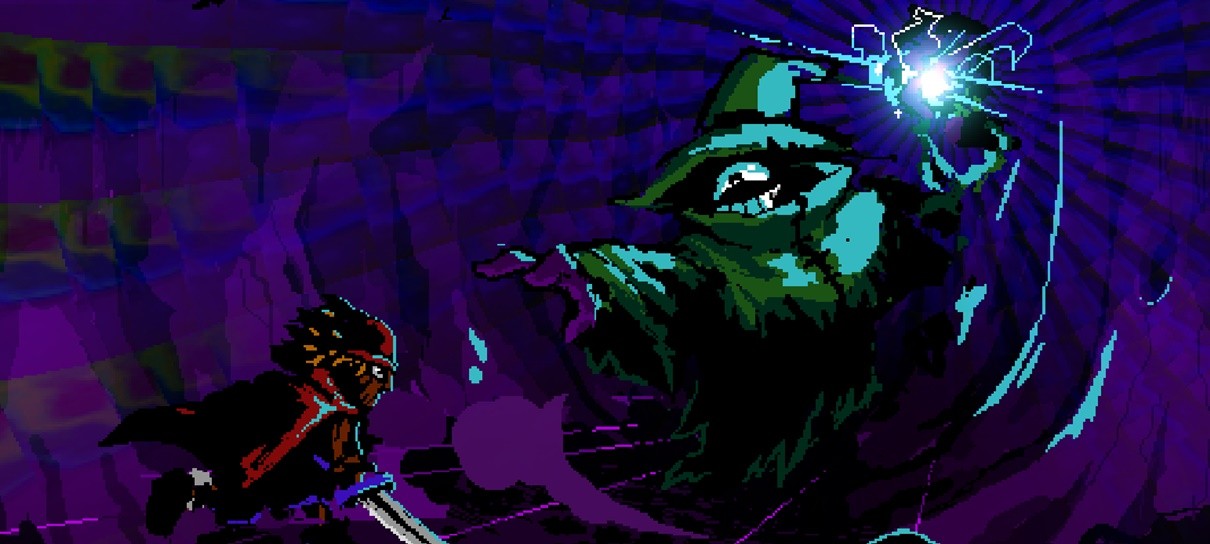
!!! WARNING. SPOILERS. !!!
Everhood for me. It’s divisive, if you manage to connect with the game and don’t bounce off it, I think it’s one of the most emotionally powerful experiences I’ve gone through at least. The themes just happen to be intensely involved with most of my longest standing philosophical and existential struggles and the game was cathartic in dealing with them. Plus it’s psychedelic, eastern/buddhist inspired, and is fully capable of rendering you emotionally raw.
That the asynchronous musical real time combat works so well for me just sends it even harder. The OST is nearly 3 hours long and nearly every song is a banger. Quite intimate at times, as the game I think deliberately ties the song to the character’s very “soul” as you’re struggling to kill them.
The basic premise is this: You may know, if you’re in the right type of debate or philosophy communities, how often the topic of dealing with death comes up. Atheists I often find saying living forever would be absurd mental torture and maddening. Even though I agree I’d still choose to be ageless all the same as I’d rather that than not existing. Unpopular opinion. I don’t expect anyone to agree with me and that’s fine, I’m weird. Well, this game explores that scenario and certainly doesn’t agree with me either.
You’re orbiting the very last star in the entire universe, experiencing a later stage of Universal Heat Death before the last thing happening is evaporating black holes exploding in gamma ray bursts. With people who countless eons ago figured out how to become ageless. They’ve lived for so long they’re physically twisted, messing with their forms out of sheer boredom and they’re various flavours of insane.
Your character is pressured into finally ending the lives of the remaining survivors and then destroying the last star and reality itself. Truly ending it all. It’s muddy and the game isn’t going to let you go about that without feeling conflicted. The main character has tried before, failed, and lost their memory out of grief, laying dormant in the forest for who knows how long before this amnesiac second attempt begins with the encouragement of a frog man who very much wants to end reality itself. You can refuse btw, and get an extremely difficult fight out of it.
This is all played out with Undertale styled humor and characters. It’s certainly under the Earthbound branch alongside LISA but much less crass.
At the end, I walked away being far less afraid of death and that’s a big deal for me as an atheist who before this found zero comfort in the responses people gave online when it came to dealing wirh death when you’re unwilling to believe in comforting lies like religion. I’d still choose to be ageless if I could :p but at least I’m at peace with reality for now.
If I caught anyone’s interest I think it’s best played on Expert so the fights really feel like the narrative wants them to feel: tooth and nail struggles. If you end up enjoying it, the sequel is an utter travesty and the biggest disappointment in a form of media I’ve ever experienced.
The two fictional courtroom dramas that changed the course of my life (eventually persuading me I wanted to become a lawyer and make sure the system works towards justice) were A Few Good Men and To Kill a Mockingbird.
And even though recently things have seemed kinda bleak on the justice front in the big seats of power in the US (in the three branches of government), there’s still a million tiny ways to improve things locally, including in day to day interactions with others. So I still draw some inspiration from those ideals.
Children of Men. Lack of human sustainability is depressing.
Probably a bit stereotypical, but in my teens I read Brave new World (Aldous Huxley), followed shortly by Brave new World Revisited. Really showed that even back when it was written, society is slowly getting worse. Sort of made it very easy to see how it continued (and still is) to the present day.
Ghost in the Shell. It really changed how I seen my body, not as something that I am, but as something I control. Now I can start and stop peeing whenever I want.
Doesn’t quite fit your specification, but George Carlin’s Class Clown (via Piped) album opened up my mind to the idea that it was okay to question religious teachings.
Snow Crash is a Sci-Fi book from the early 90s. It coined the term metaverse. It takes place in a post American collapse setting, where corporations have taken over. There’s a lot of interesting points in the book, probably as interesting today as the day it was wrote.
But what stuck with me, and helped form my understanding of society and helped me build my career in tech was his observations on franchises. He posits that franchise are basically a living organism, who’s DNA is written in binders. These binders cover every eventuality. They explain process, procedure, and expected results so that the humans in each franchise can keep the organism alive.
It was kinda a throw away set dressing just setting up the world at the beginning of the book, but it is the part that had real meaning to me.
Was that the protagonist who said that?
Nope, the narrator, which I don’t remember well, might have been the inner monologue of the hero protagonist.
The main character in Neal Stephenson’s 1992 science fiction novel Snow Crash is named Hiro Protagonist.
ThatsTheJoke.gif
Yes, that’s why I expanded on what you said and spelled out hero protagonist.
Imajica by Clive Barker flipped a switch in my (then) teenage brain making me understand that “fantasy” books don’t need to have swords, wizards, and all the other tropes. That the idea of “fantasy” as a genre is far far richer than I imagined.
Same! It turned me on to the whole modern, urban, fantasy genre which is often more compelling due to being able to relate to the settings.