

cross-posted from: https://lemmy.world/post/54245880
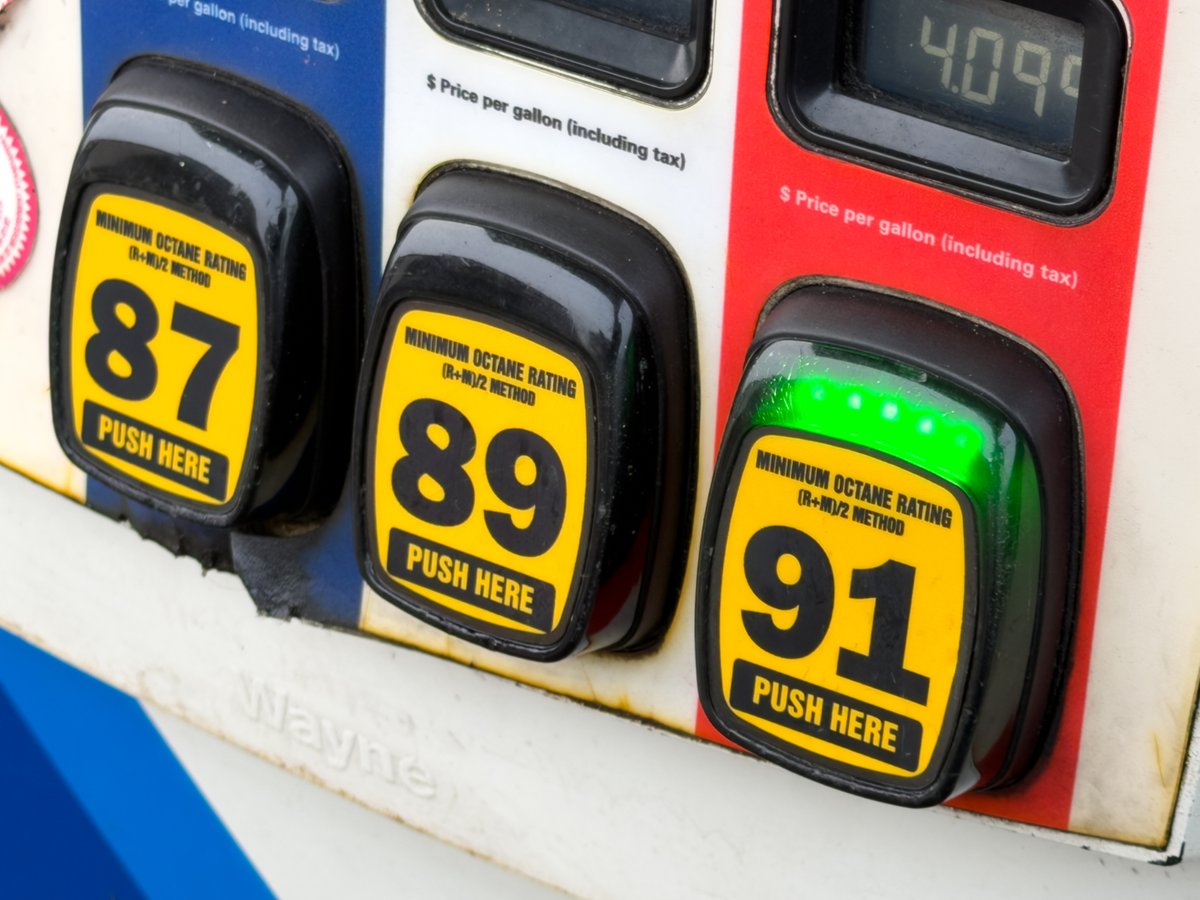
The U.S. war with Iran has raised fossil fuel prices so much that the resulting drop in oil demand has put the world on track to see a rare dip in carbon emissions from these sources in 2026.
Between 2019 and 2025, carbon dioxide emissions from fossil fuels grew by about 0.8 percent annually, according to a new study published in Nature Climate Change. But 2026 is set to buck that trend: high oil prices, as well as the continued rise of green technology—solar power, wind and electric cars—will cause a “short-term” 0.4 percent drop, according to the study.
“The high petrol prices following the war in Iran are reducing oil use and keeping emissions low,” says the study’s lead author Corinne Le Quéré, a professor of climate change science at the University of East Anglia in England. “But that’s not the whole story: The expansion of renewable energy has progressed a lot in recent years, led by China. And [along with electric vehicles], this is offsetting two thirds of the growing demand for energy.”
With all sources of carbon considered, including deforestation, total global CO2 emissions are set to continue increasing.
well france tried that and people rioted. Trump (unintentionally) made gas prices skyrocket and just caused one of the most lopsided elections in modern US history. Asking middle and especially lower class people to pay more for energy, even just in the short term, runs the risk of turning them against eco-conscious legislation.
So I think a better strategy is just more incentives and funding for clean energy.
There’s always disagreement between the carrot and the stick. It’s high time for both: the carrot or renewable energy and EVs and the stick of higher gas prices. We’ve wasted hundreds of billions of dollars over the last few decades trying everything except renewables: it’s time to focus on building out the obvious answer rather than finding yet another way to avoid reality while making fossil fuel executives even wealthier
But we had those incentives
I hate to be cynical of incentives but our entire economy of the last 12 years is the “face eating leopard” economy. Continuing to step on our own feet as we stumble drunkenly down the stairs is an underrated cause of Chinas success
To be honest, there is a massive difference between prices going up because of taxes and going up because someone started a stupid war and told everyone costs were going down.
Do you think all of the people who flipped blue really care about the war? They certainly didn’t before gas prices went up.
I said they noticed prices first and they probably wouldn’t care about the war otherwise.
I’m not sure I agree, I don’t think most people consider the causes that deeply. That’s how we ended up with trump in the first palce.
one is easily attributable to whoever introduced the legislation and the other could be anyone’s fault (who knows it could be Iran it could be Israel it could even be Pete hegseth)
It’s greedy rich people.
It’s not just about the ones that can’t afford to pay more for the energy, there also usually isn’t a viable alternative available for them to even look at moving toward instead. It’s one thing to make a decision pay more for convenience, if you have another option. If there is no other option, you just feel like you’re getting personally fucked.
In the US, all of the public transit infrastructure outside of like 4 major cities is dogshit. There may be a bus, that doesn’t go everywhere, runs at odd times, and is poorly maintained. Technically available, but if you need to travel across town to work, takes 3 hours one way to do so through 2 different transfer stations. And since everything was built around personal vehicles, things are also not within walking distance even if you are lucky enough to work from home or have something closer.
Having a car is a necessity for most of the country. Without having viable alternatives, increased fuel prices aren’t going to actually fix anything, just turn people even more against any changes.
This is why things like EVs are a good middle ground with the current lack of public infrastructure available nationwide. It’s an easy drop in replacement that’s a better ongoing option, with a side effect of also costing less to maintain along the way.
There’s still a choice. They can decide whether to drive a 15 year old pickup or a 15 year old Toyota. They have choices in how often and how far they drive. They have choices in shared transportation. Some of those choices are immediate and some build up until a bigger decision.
I’m old enough to remember car pools over commuting alone, shared shopping trips, people managing even when not everyone had a car. I remember a before time where not every adult had a car and not every car was a full sized pickup
There usually is an alternative. I watch people richer than me, using more energy, complaining about the costs and how much they are struggling… Just don’t use all that energy then. But they won’t.
But that conversation seems to be impossible. They just say they NEED it. I don’t think they care, even the slightest inconvenience is too much.
Its not just energy, its almost every expense in modern life. Overconsumption won’t bring you happiness, working longer to buy more stuff isn’t going to improve your life.
agreed, and a lot of people have no choice for the fuel used to power their domiciles. If you want solar you have to own your home, not have a restrictive HOA, and have the cash (or credit rating for a decent loan) to fund it.
That’s true if you’re all-or-nothing on residential solar, but if you’re interested in making any small changes you can, a 30W solar panel is enough to charge smart phones and power banks. They come in portable versions with USB hookups and aren’t crazy expensive. Good for emergencies at the very least.
On a slightly larger scale, you can find portable power stations ranging from 500W to 2400W max continuous output, usually with built-in MPPT controllers and power inverters so you can charge them with solar and they can provide AC power. 100W panels are enough for the lower end of these, and can be daisy-chained in parallel to output higher wattage (parallel keeps the correct voltage while increasing amps; don’t do series unless you need higher voltage, which isn’t likely on this scale).
It’s not the same as running your whole house on it, but it’s better than say a backup generator, and the larger power stations can run most kitchen appliances. Or some you can use as a UPS switch, but only if it’s rated for that.
So there are options. By no means perfect. We’ll need more sweeping legislation to make residential solar more viable for more households.
And personal solar really isn’t the entire goal anyway. Symbiotic goals are appliance electrification and the most cost effective approach is when you need to anyway.
I installed a heat pump in my family room …… because the air conditioner died, and a heat pump was the same price as a new air conditioner. I still heat with gas when it gets cold but now I also have a cheaper, cleaner option in the “shoulder” seasons.
I don’t have solar, but if I could afford it, I would now also benefit even more from it
Yeah, that’s why if we had incentivized it more starting several years ago, we could have made more progress by now. But we did the opposite.
Not everything is an immediate decision. At some point renters need to renew, nomads need to relocate, people have to find a different personal vehicle: there are larger decision points. We can’t be afraid of driving those larger decisions over time
You can’t claim something is useless if people cant change their habits immediately, but they probably have a yearly apartment lease and there may be opportunities every year.
Yeah, if we could have been building out the renewable energy infrastructure since 2021 like we needed to be doing, then by now it could already be a viable enough alternative that we would be able to end fossil fuel subsidies without too many people feeling the pinch, and even the stragglers would climb on board the green energy express shortly after. At that point it would be time to start ramping up taxes on fossil fuels to disincentivize it for the billionaires who would be insulated from the original price jumps.
But no, fucken Joe Manchin had to side with republicans on blocking the original Green New Deal so that we ended up with a fucking neutered compromise.
So now we have two roads in front of us: we can start building the renewable energy infrastructure and converting the grid. Or we can continue feeling the squeeze tighter and tighter each year until the price of oil is the least of our worries as food and water become scarcer and scarcer.
Choose wisely!
Rotating villains
I’m honestly starting to reassess whether it’s even worth it to put energy into a strong primary push, or if I should just sit it out and let it all crumble under its own weight.
But I know if I choose the latter, even then I won’t have the satisfaction of saying “I told you so,” because people will never learn from their mistakes, and they’ll still sideline voices like mine to be drowned out by the deafening sounds of handwringing and placating lipservice.
So reminding them that present circumstances were predicted years ago and that we should have listened then, they’ll just say “that isn’t helpful right now,” and then go back to their corporate-sponsored thinktanks who have been telling them to ignore it all along the way.
Maybe my energy would be wiser spent doing doomsday prep.
We’ll see how things go starting in January, and reassess by 2028.
I would say vote third. If an offered candidate has a history in representation, local, state, or national, you can check their voting record on ballotpedia or other sites.
Yep, massive expansion of solar, wind, geothermal, tidal and maybe nuclear power for some base load in combination with large amounts of battery capacity is the way to go. General enforcement of electrification is needed. Every instance where hydrocarbons are simply used for their energy content instead of their chemical properties has to be replaced by the grid (outside of emergency measures). I am sure that this would be more than enough to get global emissions under control, and would also lead to more geopolitical stability.
Make sure you remind people that this will save them on utility costs. Because that seems to be what most people care about.