
I hope I won’t regret this, this is already the second time https://slrpnk.net/comment/23703343

- 0 Posts
- 51 Comments
Joined 2 months ago
Cake day: June 5th, 2026
You are not logged in. If you use a Fediverse account that is able to follow users, you can follow this user.
The thing is, not even open loop cooling systems “use” that much water. The water is returned to the cycle after usage. So it shouldn’t be a problem, unless they contaminate that water somehow, which actually does not even sound that unlikely…
Anyways, thermal power plants often use open loop cooling systems, and their water “usage” is also fairly small compared to agriculture. You can see either here https://pubs.usgs.gov/circ/1441/circ1441.pdf or in the way too long comment I wrote https://slrpnk.net/comment/23703343
If you really wanna compare notes, feel free to add some here https://slrpnk.net/comment/23703343. I’m on @Psionicsickness@reddthat.coms side
How nice that you doubt that. Sorry for being snarky, I spent too much time reading through this comment section and your comments are actually among the more reasonable ones. They are just based on anecdotal evidence, which rubs me the wrong way.
To give you some hard data, here is the “raw” version of the USGS from 2015. Rain might play a small factor, but the amount of water that is needed additionally is on another level. https://pubs.usgs.gov/circ/1441/circ1441.
I also wrote a way too long comment at the top-level here in case you have too much time.
But following that argument wouldn’t you want to shut down the big water consumers? There are many things using more water than AI data centres.
Not sure how to correctly link comments across instances on lemmy, but I went way too deep into this in another comment here https://slrpnk.net/comment/23703343
Tl;dr for this specific case: (animal) agriculture is the main reason the aquifers in USA are drying out https://en.wikipedia.org/wiki/Ogallala_Aquifer#Accelerated_decline_in_aquifer_storage
Haven’t done any research
Hey great! Cool that you share your unfounded opinion with us! Sorry for being snarky, but I spend too much time looking into this.
Depending on how much you actually want to read, either look at my other comment in this thread or read up on the reported numbers by the US Geological Survey
I do share the fear of exponential data centre growth, but if data centres reach the amount of water consumed by animal agriculture, we’re seriously fucked.
Whatever water beef is using hasn’t really changed
It might not have changed much per kg, but overall meat consumption is up by a lot over the last few decades. So yes, it is a problem, not only because of its water use.
https://ourworldindata.org/grapher/per-capita-meat-consumption-by-type-kilograms-per-year
but AI data Centers are a recent significant change much more likely to affect me.
Just because you don’t see the damage that is already in progress, does not mean that it doesn’t affect you. Agriculture is in the process of drying up the aquifers in the USA, and that has been a problem since before AI
Oh boy, here we go again. We had this discussion two weeks ago over on !conservation@slrpnk.net (with a cross-post to a vegan community, but please don’t go there and start harassing vegans. It was enough of a shit-show already.), where I wrote way too long of a comment, and the post got deleted afterwards. What a waste. But since it is brought up here again, I’m gonna recycle some of that and make you relive it with me. [Turns out this comment is even longer than my original one. Sorry for that.]
The best source I could find to get a rough idea of what is using how much water (in the USA) was the USGS Estimated Use of Water in the United States in 2015. (yes, there were no AI data centres in 2015, but bear with me, this is gonna be a long ride.)
One of the main problems in discussing this is that there are different kinds of water use, which luckily the USGS publication differentiates - namely “consumptive use” (water that is not available after the process) and, well, “non-consumptive use” (they report it as “reclaimed waste-water”, i.e. water that, possibly after treatment, is immediately returned to rivers or similar for further use).
As the report compares total water use, “thermoelectric” (not sure why they use that term, it’s probably supposed to be “thermal”) power generation is the biggest reported category with 41%, followed by irrigation with 37%. When looking at consumptive use, the share is vastly different - only a fraction of the water used by thermal power generation is evaporated (see page 42), it consumes “only” 4.3 BGal/day, compared to 73 BGal/day for irrigation (page 30). That’s not even in the same ballpark!
[Reveal spoiler to get ahead of people mentioning the categories livestock and irrigation in the publication]
One thing I dislike about the publication, but can’t really blame them for it, is that they separate water use for irrigation and livestock. They put livestock at 1% of water usage, but also explicitly state “The livestock category excludes on-farm domestic use, lawn and garden watering, and irrigation water use.”, meaning it is really mainly the water directly consumed by the animals, which is almost negligible compared to the crops they are fed. This wrongfully gives the impression that animal agriculture only makes up 1% of water usage.
Turns out water use != water use. However I’d argue, that people would rather agree, that the kind of water “consumed” by growing plants is more permanent than water being “consumed” by cooling power plants, where most of the water is put back into the water cycle immediately.
So now we have a rough picture of how much water is used for agriculture, and how much for (thermal) power generation.
My point would be that it is very unlikely, that AI data centres use more water than the power plants that generate their electricity (on average; not all electricity is generated in thermal power plants), especially as thermal power plants generate at least as much heat as electricity, so the power plants already need as much cooling as you’d need if you just turned their electricity into heat (which data centres basically do). But even if the data centres used as much water as all the thermal power plants in the USA, it would still only be a fraction of the water used for irrigation.
Now considering that feeding animals is less efficient in converting farmed area and water to calories for human consumption instead of directly feeding people, and it should be quite obvious, that animal products are responsible for a big portion of easily avoidable water usage (For some fun comparisons: calorie supply by food group - In the USA 72% of calories are provided by plants, the remaining 28% are some form of animal product vs global land use for food production - 80% of agricultural land is estimated to be for livestock, vs 16% for food crops (granted, livestock land includes land for grazing, but even without that, it’s 6 million km^2 for animal feed crops vs 8 million km^2 for crops for human food, so disproportionate to the amount of calories they provide))
And on top of all of that, if it wasn’t already enough - the water usage of animal agriculture hasn’t just recently started to become a problem, it has been a problem for quite some time. In the USA most aquifers are drying up including some very important ones for agriculture - and that was a problem before AI data centres sprung up everywhere
Water consumption of AI is not the main environmental problem, its energy use and especially the source of that energy is way more concerning.
The thing is that yes, we should not use AI for all the reasons that have been mentioned numerous times, but if you focus on environmental problems, then the best thing you can do is stop eating animal products. Heck, it doesn’t even cost anything. On the contrary, it would be cheaper. It doesn’t even require new technologies! Going vegan is degrowth in action.
That being said, I’ll still condemn you if you use AI, even if you are vegan.
[Bonus round - golf course water usage]
You still don’t have enough? In the now-deleted post there was also a discussion about water usage of golf courses compared to data centres. The USGA estimates golf course water usage at roughly 2 BGal/day. An insane amount, when thinking about it, but tiny compared to agriculture.
Glad it was of use :)

 4·3 days ago
Wirklich, Desinformation? Das ist nicht Desinformation, das sind die Grenzen des Wachstums. Das gilt auch nicht für “wenige” oder “einzelne”, sondern für alle.
Und - das ist jetzt meine persönliche Meinung - ich meine, dass wir keine neuen Ideen brauchen, um unsere Probleme zu lösen. Zumindest nicht in dem Maße, wie es uns der Kapitalismus verkaufen will. So gut wie alle Probleme die wir haben, sind gesellschaftliche oder soziale Probleme, die wir uns selbst geschaffen haben. In vielen Bereichen würde es schon immens helfen, wenn wir einfach weniger machen. Aber das verträgt sich nicht mit ewigem Investieren und Wachsen.
Hot take: Kapitalismus-Todeskult abschaffen und eine Welt schaffen, in der man nicht investieren muss?
Ist momentan nicht sonderlich realistisch, aber noch unrealistischer ist eine Welt, in der man immer weiter investieren und wachsen muss.
Ich bin mir auch sicher, dass diese Startups Dinge machen, die dem Wohl der Allgemeinheit dienen, und wichtige Probleme lösen.
Wenn ich das richtig sehe, ist deren Quelle das hier https://datawrapper.dwcdn.net/Cp2WY/3/
Wirken alles wie sehr anständige und sinnvolle Unternehmen. 3 mal Waffenindustrie, 3 mal irgendwas mit KI, 2 mal irgendwas mit Banking. Genau das, was die Welt noch gebraucht hat.
Sir, this is a Wendy’s

 3·3 days ago
That’s illegal, right?
That’s got to be doom metal 🤘🔥🤘

The low level of the Rhine could have economic consequences for several of Germany’s industries, such as the chemicals and steel, which depend on the river to transport large quantities of goods.
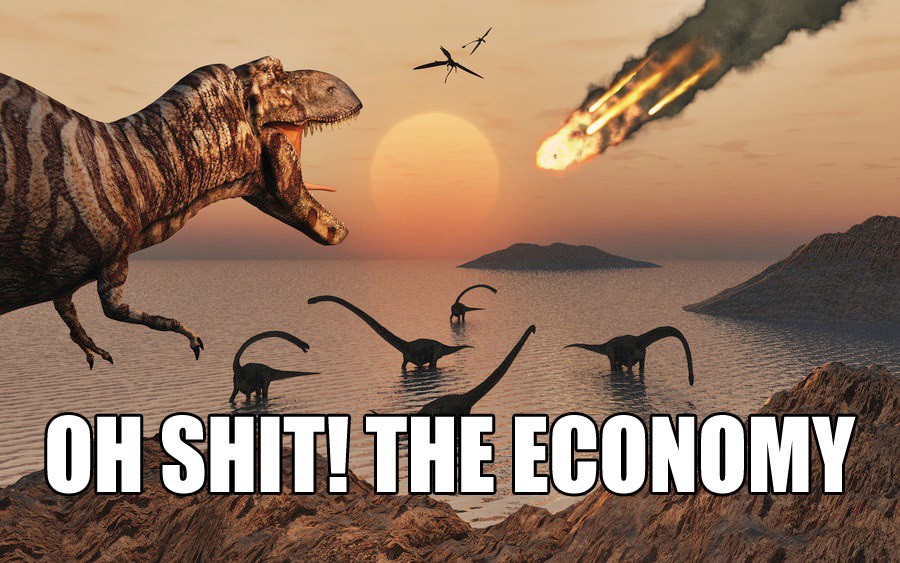
Cynicism aside, in the last few years, when there was another new record low, some “Hungersteine (hunger stones)” showed up in the rivers. The future’s looking bright.
 6·14 days ago
Wow, just came here from the cross-post on conservation. I thought that thread was bad, but this thread here is straight up horrible. Sure, blame the vegans. I don’t even expect to get anywhere here.
Why is everyone joining the anti-science movement as soon as it comes to eating-habits?

Damn, that sounds like something to satisfy the doomer in me. Do you happen to have a link?
I don’t really expect to reach you with this, but it’s worth a try - https://slrpnk.net/comment/23703343