

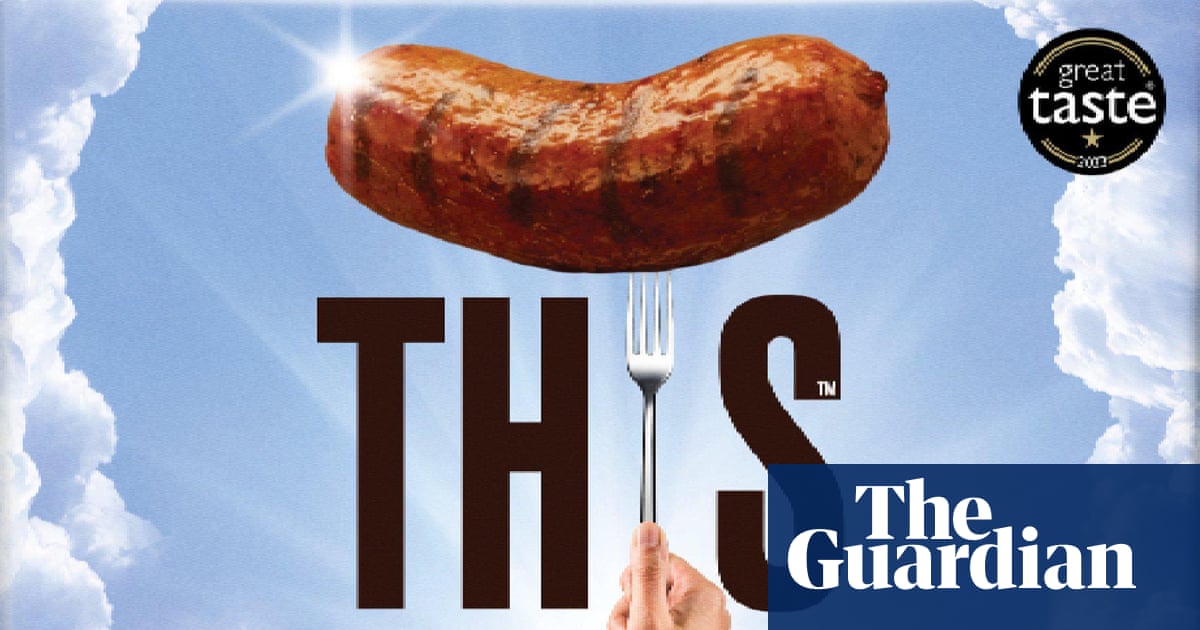
More than a dozen food companies have urged the European Commission not to ban the use of words such as “sausage” and “burger” for non-meat products.
More than a dozen food companies have urged the European Commission not to ban the use of words such as “sausage” and “burger” for non-meat products.
That is limited to english vocabulary I guess. In spanish there are distictions between salchichas, chorizos, longanizas, etc, and all of them are their own kind of “embutidos”. So in spanish, it would make sense to name it “embutido de guisantes”
Similarly with milk. I know you may milk nuts (jk), but not the “frutos secos” kind. How would you milk an oatmeal? A grain of rice?
And this is about the English word in the English use, with English rules, so let’s stick to those, shall we.
Milk is another word with another angle. The connotation is no longer, in everyday layman use, connected to “something you get out of a teet” and instead it is what children drink, you put in cereals or coffee, etc.
That’s the beauty about languages, they evolve with the needs of the populace that uses them.
We no longer live in an agrarian society, so when somebody now speaks of milk, you don’t think, “what did they milk it from”, you think “what are they going to put that thing in that they bought from a shop”.
Milk of Magnesia. Coconut milk. Dandelion milk. These are all descriptions of very long standing (100s of years).
I don’t think it means what you think it means.
In this context, no, language does not evolve. It adapts to the way it is being used.
I certainly would not like to reach a point where we must use doublespeak-eske language to communicate with certain people, but it feels like we are heading there.
Oh ok. So the word evolve hasnt adapted to mean “slowly changes over time due to small changes” in day to day speak, along with many other meanings. See pokemon, video game bosses etc. etc.
We already doublespeak in many situations. For example “theory” in layman’s terms is used like “hypothesis” instead of it’s true meaning. Where as it’s true meaning is pretty much only used in scientific terminology.
Anyway I’m sure 100% of people understood exactly what I meant.
To answer the last they’re labeled:
Bebida de Soja (avena, almendras etc), sometimes adding ‘for baristas’…but that’s only one brand.
Soy Drink.
No milk in the description at all, that’s just for the English.
My point exactly. We need to differentiate between products. An “embutido” is not the same as a “fiambre” for example, even when you find both kind of “salchichas”
Also, this being an EU ruling proposal, it should meet the specs for all members, and english is only a fraction of the official spoken languages
But sure, I guess we all milk nuts every now and then ;) (this i is intended as a light hearted joke, you nuts)